
Why Critical Solutions Require Open Data
June 29, 2026
Pre-Virality Detection: Stopping Disinformation Before It Spreads
July 20, 2026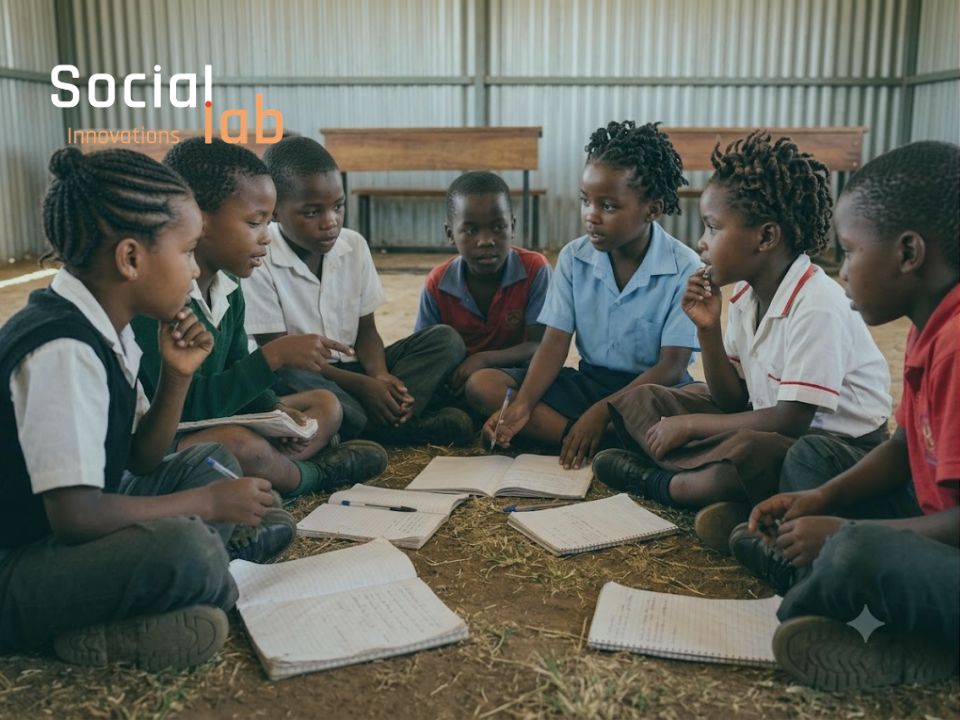
- Two Numbers That Do Not Talk
- Built for the Hardest Case First
- The Design Divide
- Where This Goes From Here
- Frequently Asked Questions
On July 15, 2026, the United Nations marks World Youth Skills Day under the theme Skills for a Shared Future. The UN states plainly that 273 million children and young people are out of school globally and that 86 percent of students do not feel prepared for an AI-enabled workplace. The rhetoric around AI in education has settled on words like equitable and inclusive. The platforms being built are mostly not reaching the children the divide is widest for.
182 million children live in the world's 20 highest-severity emergency and crisis contexts, and 74 million of them are out of school entirely, roughly 80 percent of all out-of-school children identified globally. They are concentrated in the settings furthest from any classroom, device, or connection. Girls, refugees, and children with disabilities carry a disproportionate share of that number.
Read those two things side by side and the gap becomes obvious. Three weeks before this year's observance, a sharper number landed, the kind that should sit underneath every AI-in-education pitch deck being written right now. The growth in EdTech investment and the growth in access for the most excluded children are not the same curve, and they have not been converging.
Two Numbers That Do Not Talk to Each Other
The global EdTech and AI-in-education market is one of the fastest-growing categories in enterprise software. But faster growth in that market has not meant faster access for the children who need it most. UNICEF warned this year that global funding cuts to education aid could push six million additional children out of school by the end of 2026, with roughly a third of them in humanitarian settings already stretched past capacity. In UNICEF's own Rohingya refugee response alone, 350,000 children are at risk of losing access to education permanently as centers close for lack of funding.
Meanwhile, most AI-powered learning tools are still designed the way most software gets designed: for the environment the product team has, not the environment the hardest-to-reach learner has. Reliable broadband. A recent device. A functioning school building. A teacher with time to train on a new platform. Every one of those assumptions is exactly what is missing for a child in a displacement camp, a conflict-affected region, or a household that cannot afford a data plan. That is to say, it is missing for most of the 74 million.
This is not a new observation inside the sector. It is the reason UNICEF's Innocenti office has spent since 2019 building out its Guidance on AI and Children, now in its third edition: ten requirements for what it actually means to build AI systems with children's rights and circumstances at the center. UNESCO's parallel Guidance for Generative AI in Education and Research makes the same case at the policy level. A human-centered approach to AI in education has to be a deliberate design choice. It is not an outcome you get by default from building for the mainstream market first and hoping it reaches down.
What Building for the Hardest Case First Actually Requires
Flip the design brief around. Start with the child who has none of the assumed resources, rather than trying to retrofit for her later, and the requirements change substantially. This is not a list of nice-to-have features. It is what honest design looks like when the user is a child in a crisis context rather than a student with a reliable device and a fast connection.
- Offline and low-bandwidth functionality Not an occasional sync feature bolted onto a cloud-first product. If a tool stops working the moment connectivity drops, it was never built for the context that most needs it.
- Compatibility with low-cost, older devices The newest hardware is the least likely thing to be available in exactly the settings with the highest concentration of out-of-school children. Building for it first means those children are visible in the original spec.
- No advertising, no data harvesting, no engagement-optimized design aimed at children A commitment that is easy to state and considerably harder to hold when the dominant EdTech business model still runs on attention and data.
- Real accessibility, tested against actual standards More than 20 percent of crisis-affected out-of-school children are children with disabilities. Accessibility as an afterthought once the core product ships is not accessibility. It is compliance theater.
- Meaningful localization Language, curriculum alignment, cultural context, not a translated interface sitting on top of content built for somewhere else entirely.
- Evidence of actual learning outcomes Not time-on-platform as the metric that defines success. The two are not the same thing, and pretending they are is one of the most persistent failures in the sector.
None of this is exotic. It is largely what UNICEF's own guidance already asks of anyone building AI systems that touch children's lives. The gap is not that the standard does not exist. It is that most AI-in-education products are not measured against it before they ship, because the market that rewards fast growth does not naturally reward building for the hardest-served child first.
The Digital Divide Is Also a Design Divide
We have written before about why equal access to AI is creating a new kind of learning divide and about what educators actually need to make AI tools work in the classroom. Both pieces address the access side of this problem: who gets a device, who gets connectivity, who gets trained teachers. This is the design side of the same problem. Even where access exists, most AI education tools were never designed against the constraints that define life for a displaced or crisis-affected child. Access alone does not close the gap if the tool was built for a fundamentally different user.
It is also the same argument we made in our piece on national AI education strategy and vendor lock-in: governments and institutions building education systems for the long term should not be building on top of commercial platforms whose incentives point toward engagement and data collection rather than sovereignty, safety, and actual learning outcomes. That argument holds even more tightly for the population with the least power to opt out of a bad default. Children who have already lost a school, a home, or both.
The gender dimension of this is its own piece of the puzzle, and one we have explored directly in Building Inclusive Digital Learning Ecosystems for Girls. Girls make up a majority of the primary-school-age children in crisis settings. In many countries, fewer than 1 percent of poor rural women ever complete secondary school at all. Gender-responsive design is not a feature you add later. It has to shape the product from the first decision, the same way offline functionality and real accessibility do.
Where This Actually Goes From Here
Skills for a Shared Future is the right ambition for this year's observance. But a future is only shared if the design process starts with the child who has the least, not the one who has the most. Build for the easy case and the hard case never gets reached. Build for the hard case, and the easy case was never in doubt.
Somewhere between those two sentences is the difference between 74 million children being a statistic organizations cite and 74 million children being the starting specification.
That is the standard we are building toward. Not the market average. Not the median user. The child who has none of the assumed resources and every right to learn anyway.
Build for the hardest case first. Everything else will follow.
SocialLab builds AI and data systems for genuine social good, from crisis intelligence platforms to education tools designed for the most excluded learners. If you are working in this space, we would like to hear from you.
Not retrofitted for them later. Built for them first, because a platform that works with no connectivity, no recent hardware, and no second chance to get it right will work anywhere else without even trying.
Offline-first, low-bandwidth by designWorks where connectivity does not
No ads, no data harvestingBuilt for learners, not monetized through them
Accessible by defaultDesigned against real standards, not bolted on after launch
Built for the hardest case firstThe bar the rest of the industry treats as optional
Frequently Asked Questions
Common questions about AI education access, design for crisis contexts, and SocialLab's approach.